What does a driving range netting installation include?
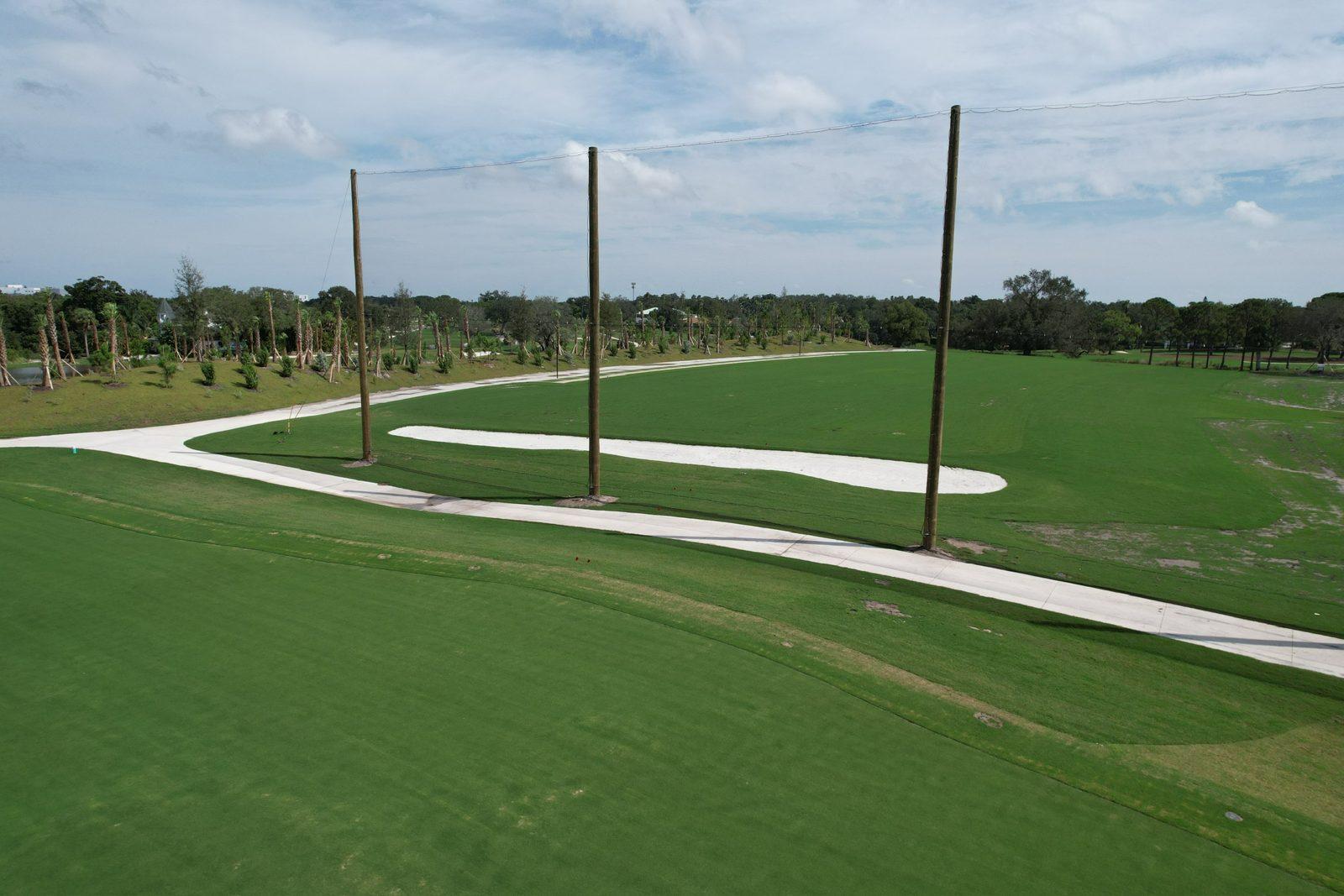
Turnkey scope covers site survey, wind-load engineering, pole layout (wood or steel), foundations, cable and hardware, netting panels, divider netting if needed, crew mobilization, and a final walkthrough. Optional breakaway panels can protect poles during extreme wind events.
How much does driving range netting cost?
New systems on wood poles typically run $80,000 to $300,000, and steel pole systems run $250,000 to $1 million+. Re-netting existing poles typically runs $40,000 to $150,000. Linear footage, net height, pole type, wind exposure, and engineering drive the number. Our driving range netting cost guide breaks it down.
How tall should driving range netting be?
It depends on range length, how far the net sits from the tee line, and what sits beyond it. Systems start at 40 feet. Wood poles reach about 60 feet above grade, which suits ranges up to roughly 250 to 275 yards. Longer ranges and high-wind sites use steel staged poles, up to 180 feet.
Should I choose wood or steel poles?
Wood poles are cost-effective and fit shorter ranges where 60 feet of height is enough. Steel staged poles cost more and take longer to fabricate, but they reach far higher and stand up to long ranges and high wind for decades. We engineer both to your site.
Can you replace the netting on our existing poles?
Yes. Re-netting starts with an inspection of your existing poles, cables, and anchors, so the new net goes on a structure that can carry it. If something needs repair or replacement, we tell you before we specify new mesh.
Do I need a permit, and can you provide engineering?
Many jurisdictions require a permit for tall pole structures. We can provide stamped engineering drawings to support your permit application.
How long does driving range netting installation take?
Most golf installs take 3 to 7 days from crew arrival. Larger projects, like big steel staged systems, can take 2 weeks or more, depending on soil, access, and weather.