Backstop Netting Materials: What Your Installers Should Be Using
Material selection determines how long your backstop performs. The wrong choice costs you a replacement project in five years. The right choice holds up for decades with minimal maintenance.
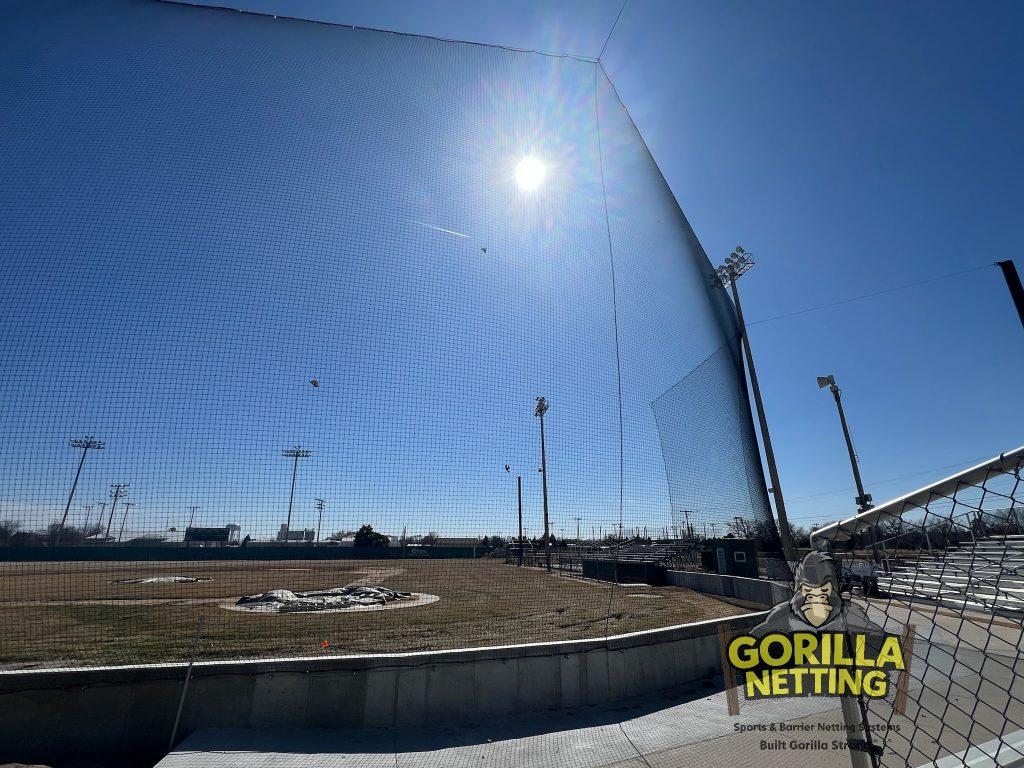
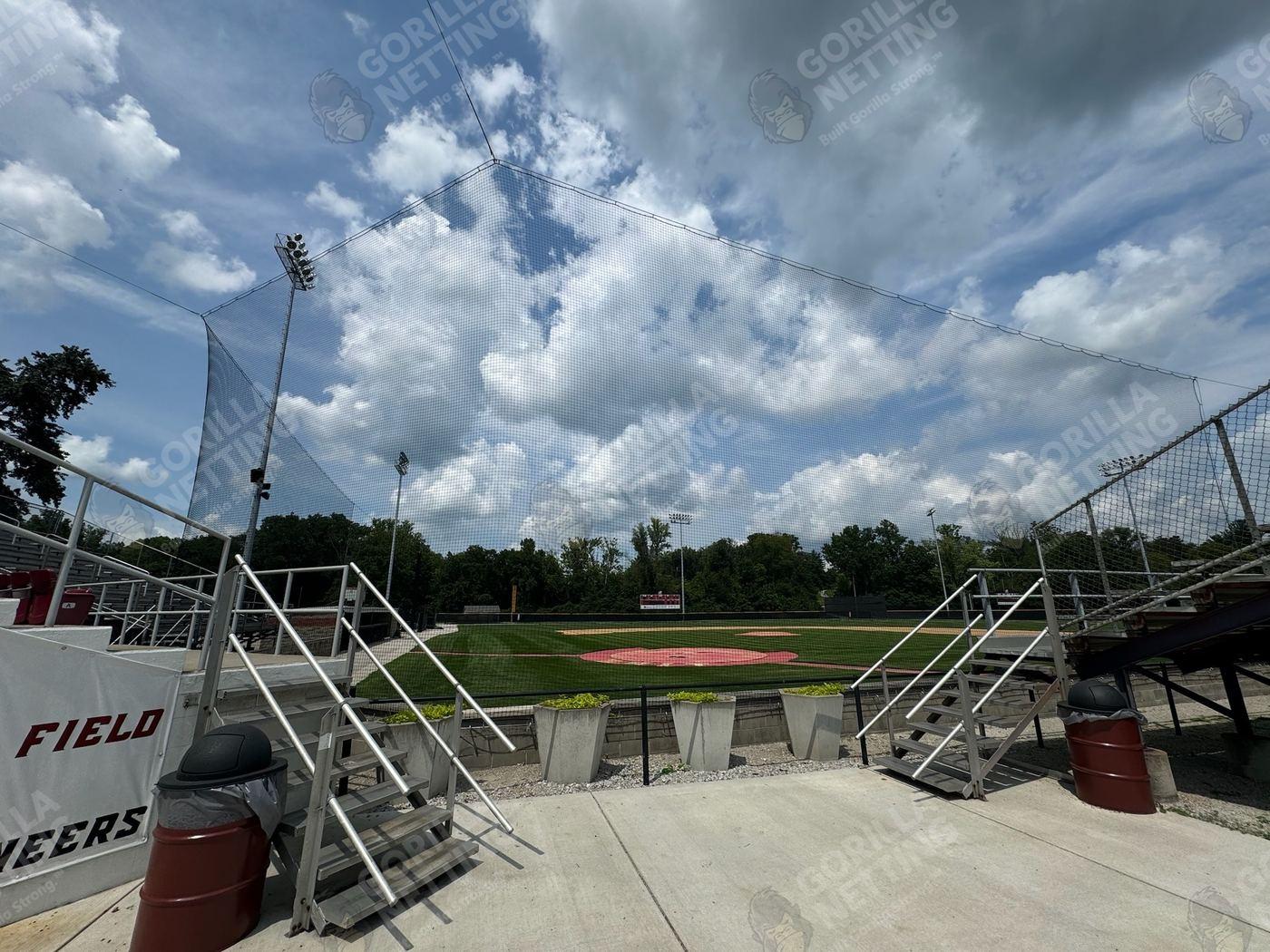
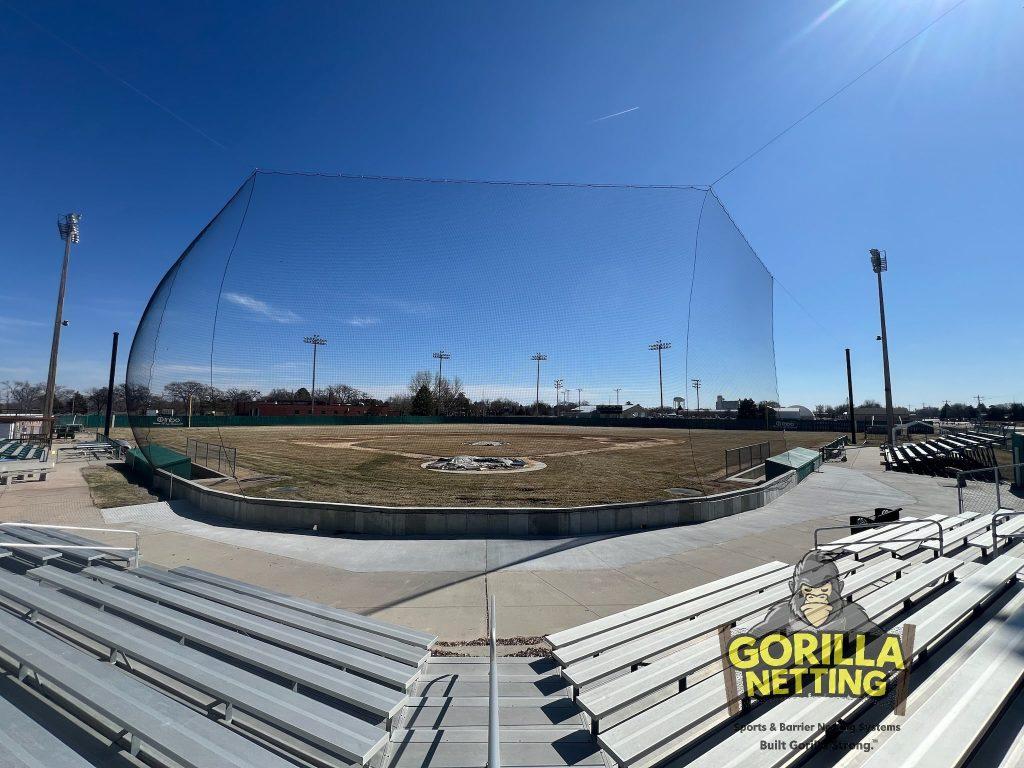
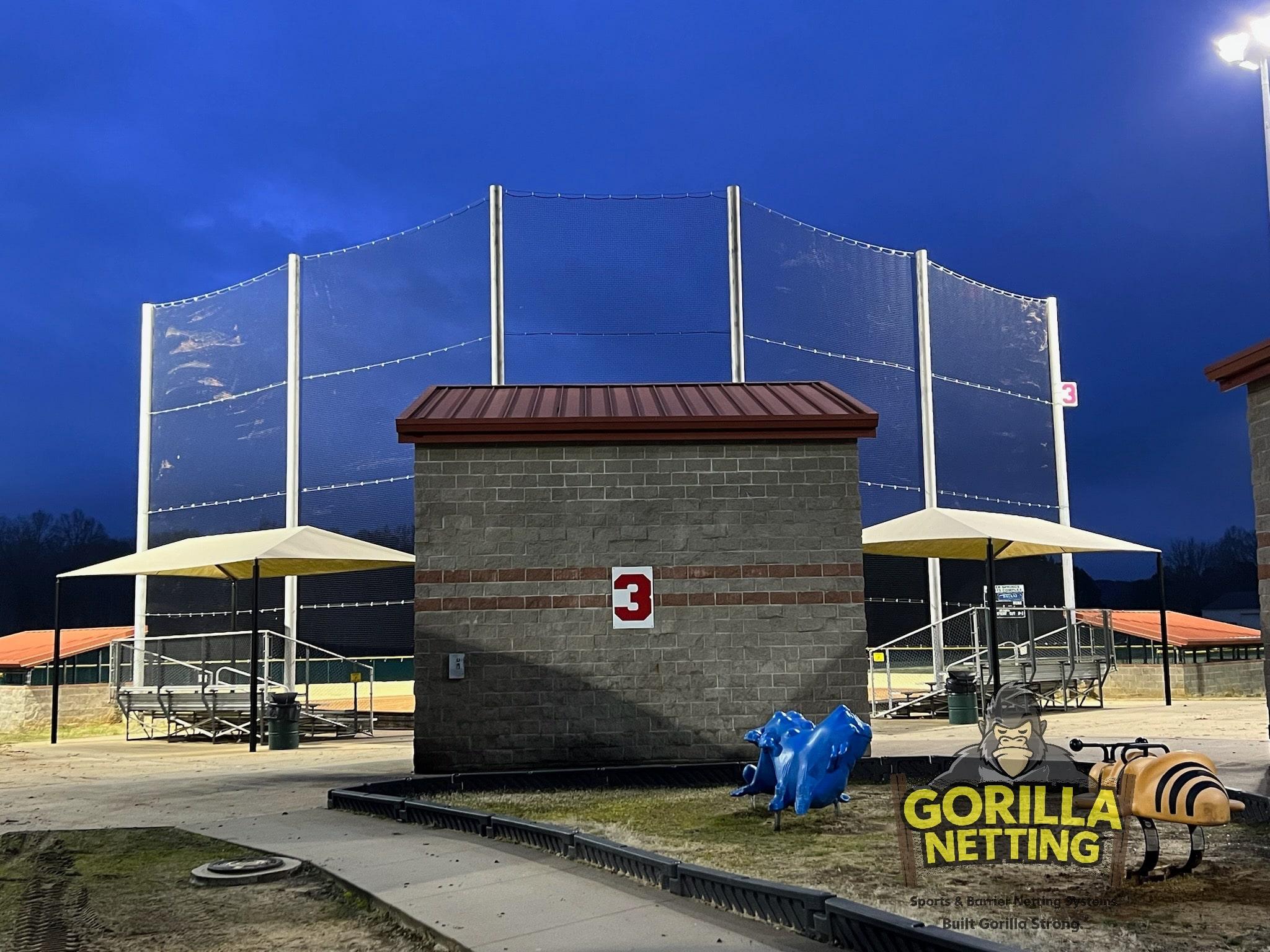
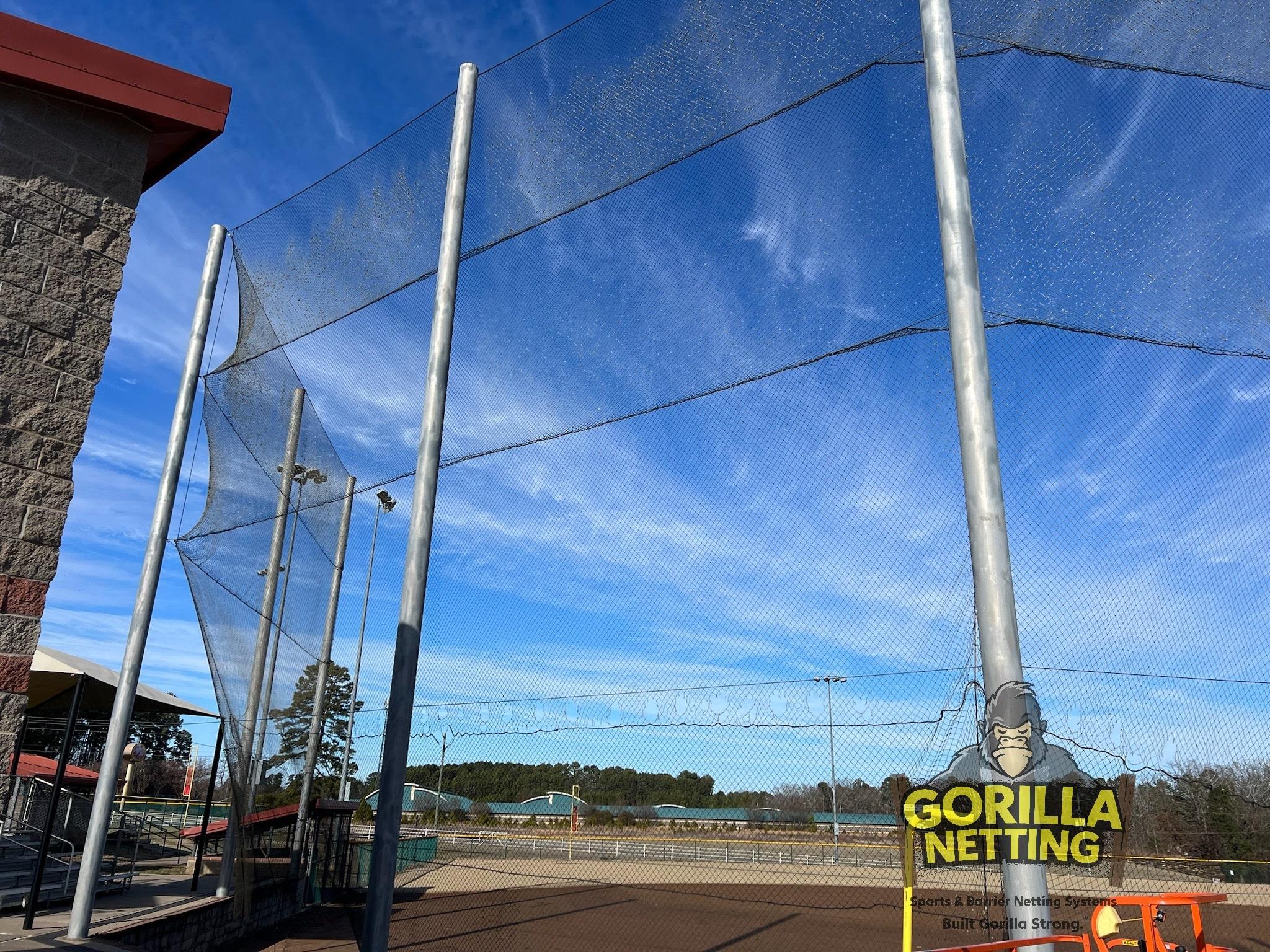
#36 twisted knotted nylonis the standard for baseball backstops. It's durable, repairable in the field, and holds tension well across large panel spans. Most recreational and high school fields spec #36 for exactly this reason.
Knotless polyester is the right call when sightlines matter: broadcast facilities, venues with camera positions behind the plate, and premium collegiate or professional installations. Knotless weave produces a cleaner visual profile from a distance and reduces glare interference with broadcast-quality optics.
All outdoor netting must carry UV treatment rated for your climate zone. Untreated netting degrades in 2 to 3 seasons in high-UV environments. We specify UV-inhibitor concentration based on site latitude and average annual sun exposure, not a one-size catalog spec.
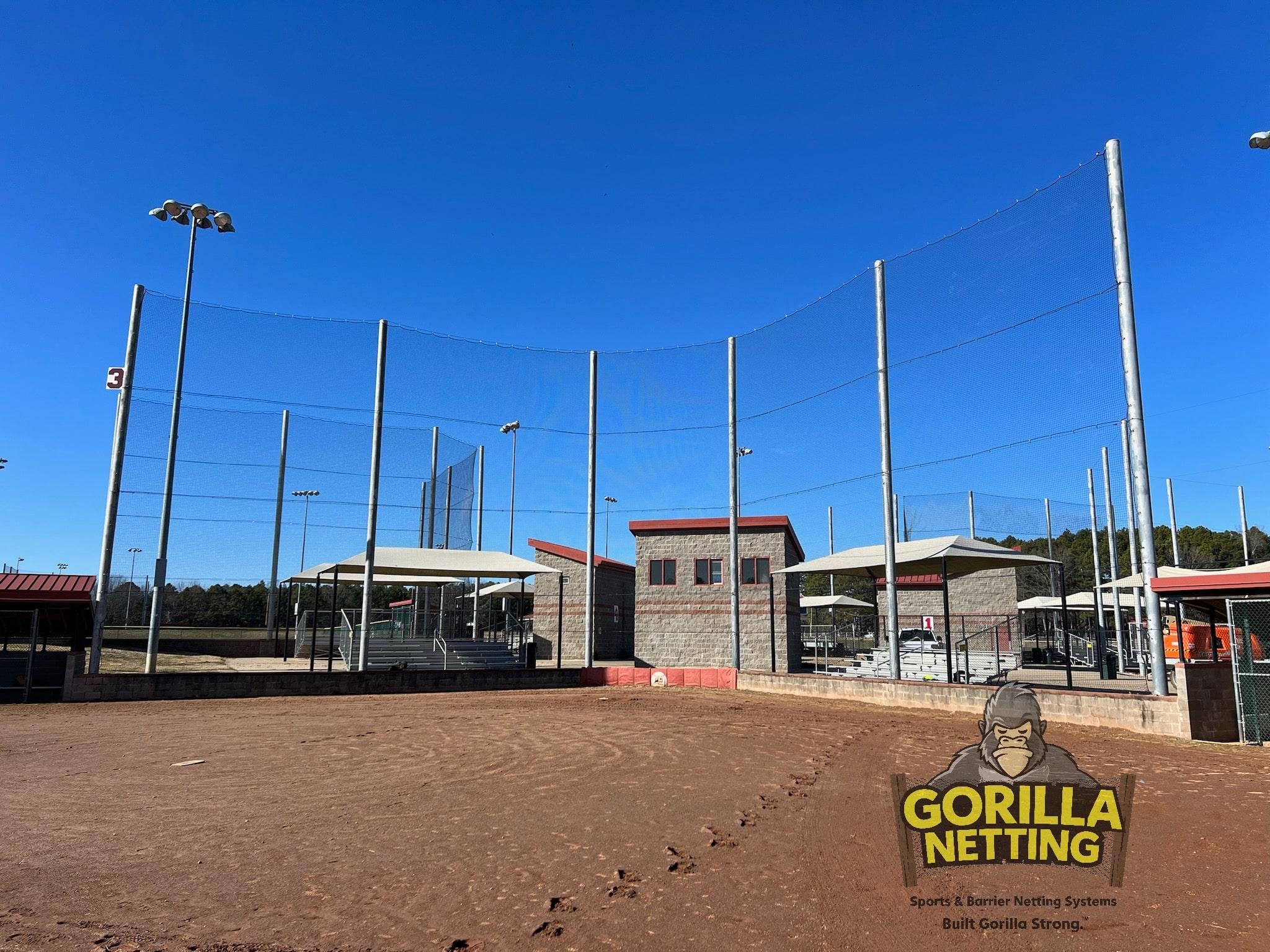
Cable sizing matters. We use utility-grade galvanized cable sized for the actual wind-load calculation on your site, not undersized hardware that creeps and sags over time. All terminations use forged steel thimbles, turnbuckles, and shackles rated for the design load with a safety factor applied. Nothing that a structural inspector can't review on site.
For facilities that want near-invisible netting (indoor training centers, high-end private facilities, or any installation where aesthetics are the priority), Dyneema is our premium option. Dyneema offers exceptional strength at an extremely fine diameter, producing a backstop that practically disappears from the stands.