
They’re not the same system
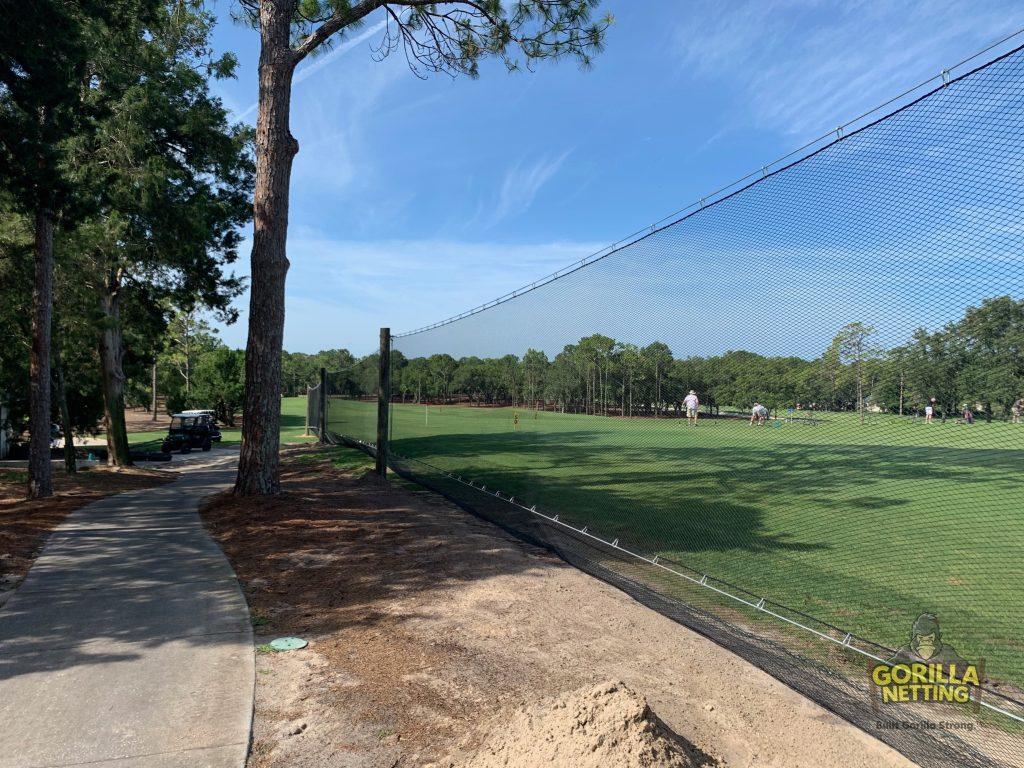
Driving range netting is a containment system designed for repeated, high-volume impact from a consistent direction. Golf course netting is a barrier system designed for property protection against lower-volume, variable-angle shots.
Driving range netting (containment)
- Typical height: 45 to 65 feet at the tee area; up to 140+ feet for full containment
- Mesh size:3/4" to 1"
- Impact profile: repeated, high-volume, single-direction stress
Golf course netting (property protection)
- Typical height: 20 to 80 feet, sometimes higher near roadways or homes
- Impact profile: variable angles and speeds; lower volume than a range
- Common locations: fairway edges, property lines, parking lots, residential boundaries
The breakaway difference
In hurricane zones and high-wind regions, breakaway systems can prevent catastrophic structural failure by allowing panels to detach safely under extreme load, then be re-hung after the event.
Side-by-side comparison
FAQ
Is driving range netting and golf course netting the same thing?
No. Driving range netting is engineered for high-volume, single-direction containment. Golf course netting is engineered for property protection against variable-trajectory errant shots.
How high does driving range netting need to be?
Most driving ranges use 45 to 65 feet at the tee area. Full containment near residential areas can require 100 to 140+ feet. Height is the biggest material cost driver.
What is a breakaway netting system?
A breakaway system allows netting panels to release safely under extreme loads (like high winds) rather than pulling down poles and cables. Panels can be re-hung after an event, protecting the structural system.